Florida Powerboat Club Still Dealing
The poker run game has tightened in recent years, but the Florida Powerboat Club is still a big player at the table.
July 27, 2011
Without Canadian winters, there probably wouldn’t be a Florida Powerboat Club, which since 1993 has been one of the nation’s premier organizers of poker runs for high-performance boats. That’s because Stu Jones, the founder and owner of the club based in Pompano Beach, Fla, is from Canada—London, Ontario, to put a fine point on it. And in the late 1980s, Jones, a longtime performance-boat enthusiast, decided he’d had enough and moved to South Florida full-time.
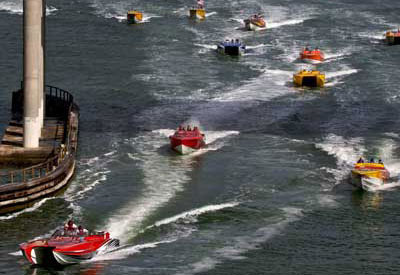
The Florida Powerboat Club’s annual Key West Poker Run in November attracted more than 150 boats in 2010.
Around the same time, poker runs in the motorcycle world were all the rage. They were essentially rallies where participants picked up cards at several stops and played their hands at an awards banquet in the evening. Poker runs were a natural fit for performance-boat owners looking to do something with other performance-boat owners beyond loosely organized lunch runs.
By 2007, business was booming for the Florida Powerboat Club, which had more than a dozen events with fleets as large as 200 boats. Poker runs didn’t just give performance-boat owners something to do, they fueled demand for the performance-boat industry. The relationship was symbiotic. The FPC and its chief competitor, Poker Runs America, which is rightly credited for getting the ball rolling for performance-boat poker runs and still has the famed 1,000 Islands Poker Run in its schedule, supported the industry. The industry, in turn, supported the poker run organizations through sponsorships. Go-fast boat owners had something to do with their boats, and if they wanted to they could participate in a run almost every weekend for nine months out of the year. Life was good—for everyone.
And then it wasn’t. In 2008, the bottom fell out of the performance-boat market—not to mention the entire United States economy—and poker run organizers felt it. Hard. Participation dropped off as much as 25 percent of it. But that wasn’t the worst, at least economically.
“Sponsorship dropped off by 60 or 70 percent,” says Jones. “It was the same in 2009 and 2010. And I can’t say that anything has improved dramatically.
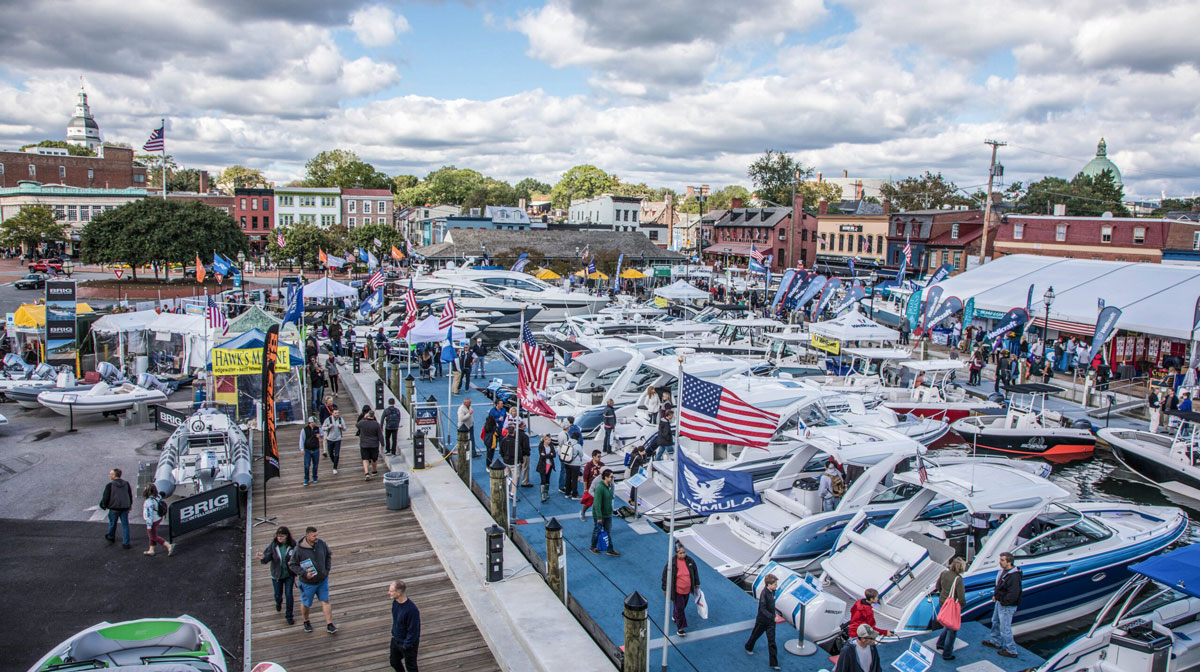
“But the 2010 event in Key West put things back in a good perspective for me,” he continues. “We had 150 to 160 boats, which is respectable size, and 20 sponsor tents. We’ve had more than 200 boats, but given the economy and where things have gone with the performance-boat industry, that was respectable and positive.”
The key to long-term survival for the Florida Powerboat Club, says Jones, is to focus on its “premier” events such as the Key West, Miami Boat Show/Islamorada and Emerald Coast runs. What that means is that in 2012 the club’s schedule will go from 10 events to six events.

Stu Jones, the founder and owner of the Florida Powerboat Club
“The way I see it, we need to put all our energy and efforts into our top six events, and put the smaller events off to the side for the time being,” says Jones. “That’s the only way the Florida Powerboat Club can survive—it’s a business and it has to be run like a business. There has to be consistency in the model, consistency in the caliber of each event, so our customers know what to expect every time they sign up. We need to maintain the quality of each event, and by going down to six runs we can focus on making them work for everyone.”
Jones says the challenge involves more than just planning great routes, stops, and destinations. At present, the Florida Powerboat Club separates its fleets into three speed-defined classes, which means top speeds of anything from 50 or 60 mph to more than 150 mph. It’s not just a matter of keeping the classes separated for safety purposes, which can be handled effectively through staged starting. It’s about giving each class a worthwhile experience so they all end up satisfied at the awards banquet.
“First and foremost, we have to do a better job of breaking out our groups,” says Jones. “We need to focus our attention on the disparity so we don’t lose the attention of the guys on either end of the spectrum. We need the 50-mph guys, the 150-mph guys, and the guys in the middle—we don’t want to lose any of those groups. What that means, essentially, is that we have to organize three separate poker runs under each event. It’s something we can do now, but can do even better with fewer events to focus on.”
That could mean good news for the decidedly hurting go-fast boat segment of the marine industry. True, would-be poker run participants likely will have fewer choices—at least in terms of Florida Powerboat Club events—next year. But if Jones succeeds, each of those runs will be more successful in the size of the fleet it attracts and the quality of the experience it delivers to the participants.
“What poker runs have done is create a powerboating lifestyle—that’s the key word, lifestyle,” says Jones. “If you’re a performance-boat owner and enthusiast, you have a significant investment, and you pretty much devote all recreational time to performance boating. It precludes doing much of anything else with your leisure time. There are only so many weekends in a year, right? So every Florida Powerboat Club event needs to be worth your time and delivery and expense. That’s the key to the success of poker runs going forward, and the survival of the sport.”
 Matt Trulio is the editor at large for Powerboat magazine. He has written for the magazine since 1994. Trulio’s daily blog can be found on speedonthewater.com, a site he created and maintains, which is the high-performance arm of the BoaterMouth group.